Problem
Each domain hands people a confident answer with the reasoning stripped out: job products optimize for volume, screeners lead with a sortable number, fitness onboarding hands you a BMI label.
A private job-search desk with a public demo, a research board scoring 1,600+ stocks on India’s National Stock Exchange, and a free fitness assessment built for India. I designed and built all three, and each one refuses to hand over an answer without its reasoning.
60-second brief · Three solo products
job-lab gives judgment, not more job links. market-lab never shows a score without its doubt. fit-lab shows its work on every recommendation. Three domains, one refusal to hand over false confidence.
No answer travels without the reason behind it.
Outcome
Three working products, designed and built alone. market-lab and fit-lab are public; job-lab is a private desk with a public demo. Each ships with automated tests and an accessibility pass.
Each domain hands people a confident answer with the reasoning stripped out: job products optimize for volume, screeners lead with a sortable number, fitness onboarding hands you a BMI label.
Put the reason beside the answer: a worth-your-hour call tied to the next action, every score paired with its objection, every claim next to its evidence and limits.
7+ job-source families normalized, 1,600+ NSE stocks scored, 270+ unit checks across fit-lab’s engines, and an accessibility pass on all three.
I owned all of it: data pipelines, scoring logic, interfaces, light and dark themes, accessibility, tests, and deployment. No team, so no claim of team leadership.
Chapter 01job-lab
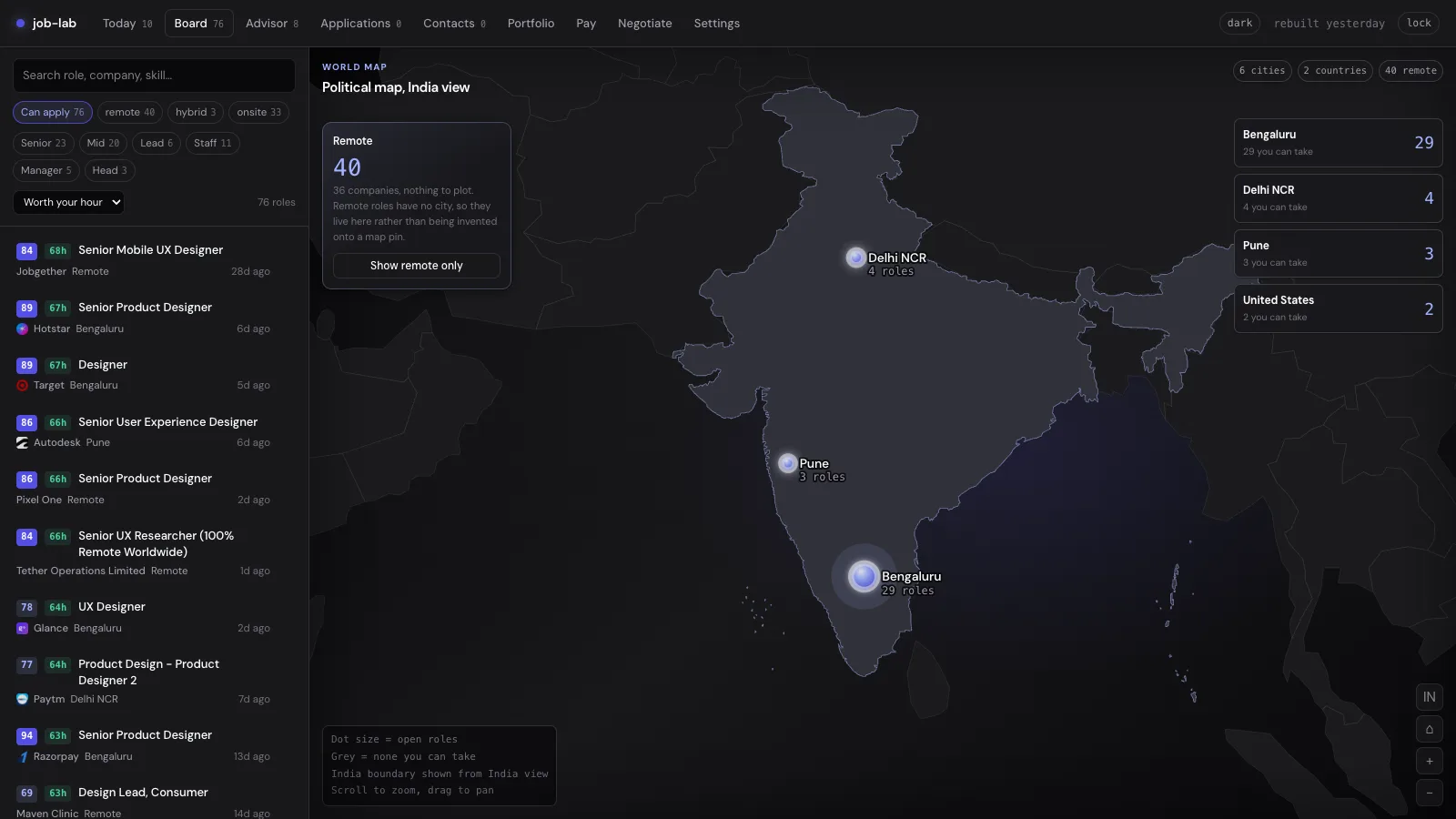
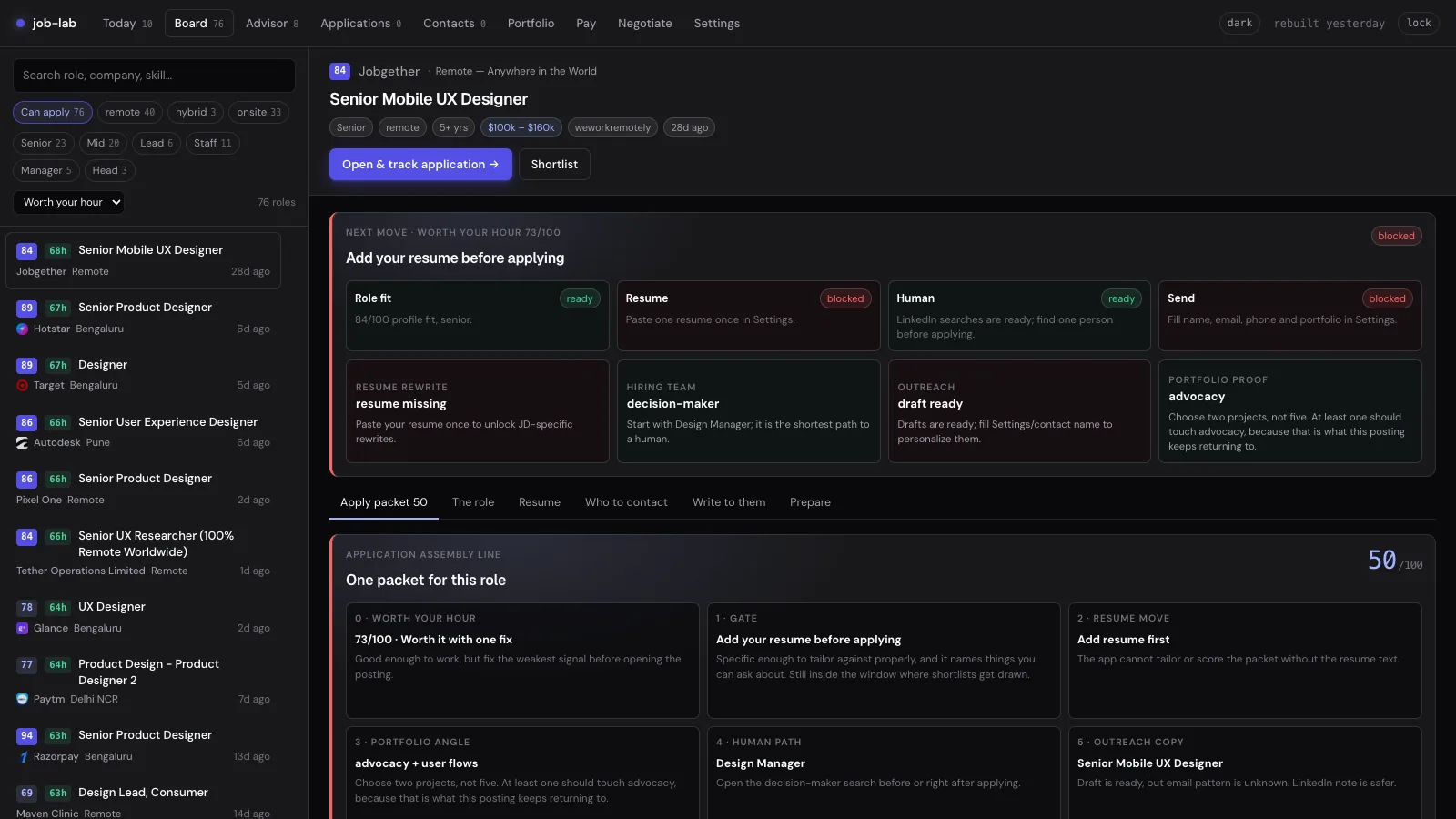
I never ran out of job links. I ran out of hours: working out which roles were real, whether remote included India, what the application should say, and who to write to. So job-lab scores whether a role is worth your hour and ties that score to the next action.
Greenhouse, Lever, Ashby, Workable, SmartRecruiters, Workday, and aggregators, cleaned into one consistent job object.
The real desk is private and stays behind a login. The public demo runs on fictional data, so you can try every screen.
Chapter 02market-lab
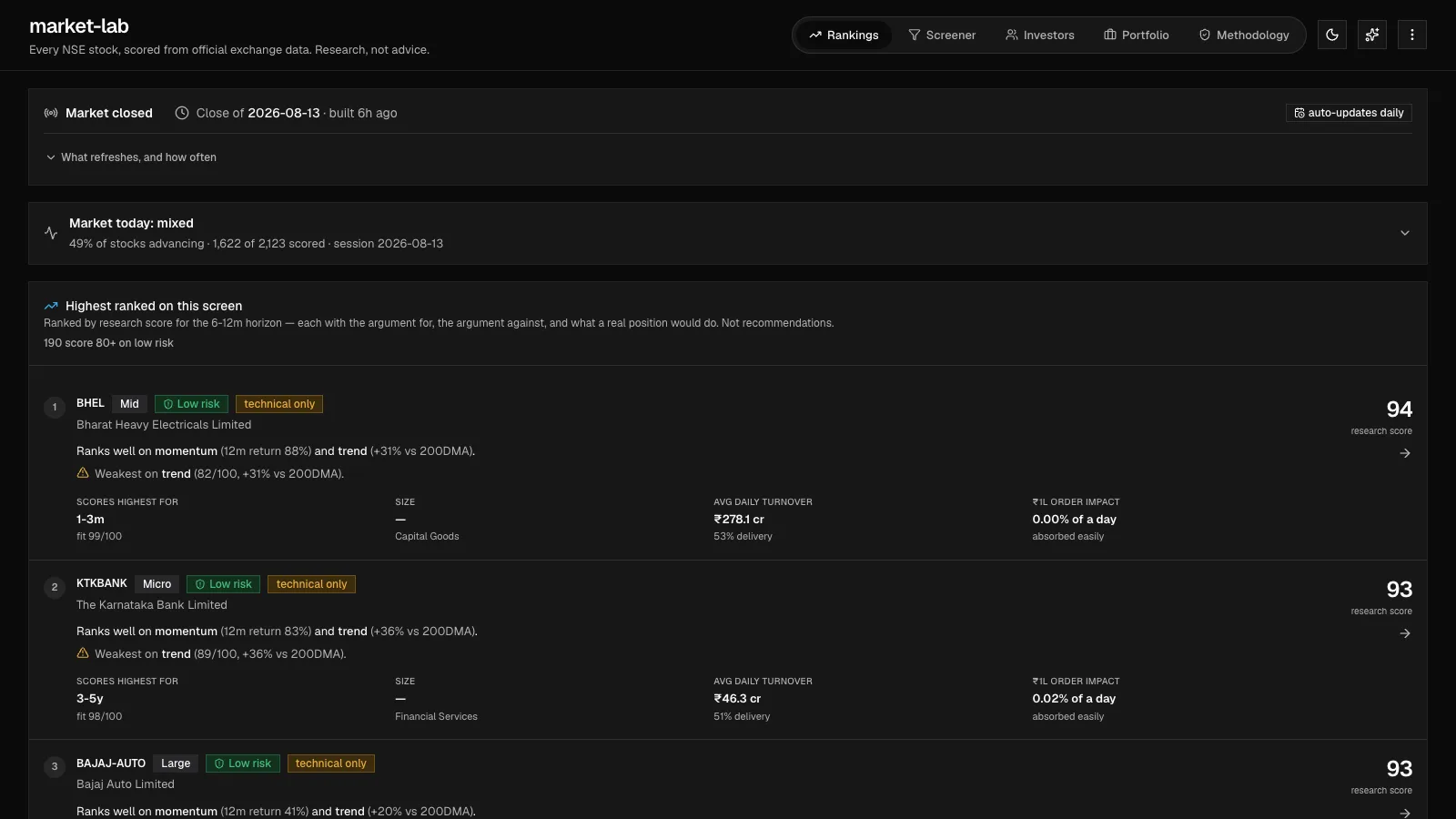
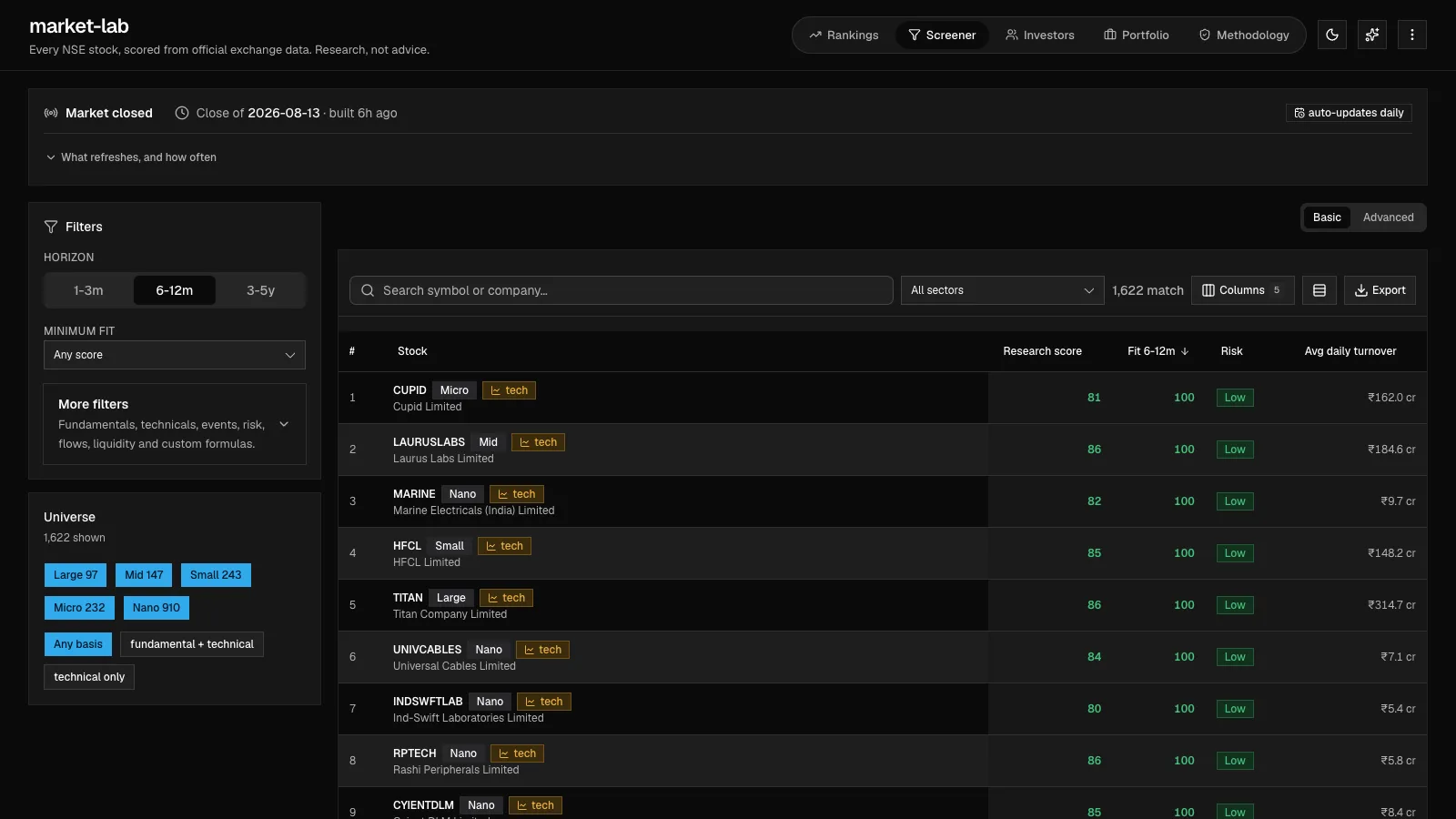
A stock screener is dangerous when it looks cleaner than the market it describes. market-lab scores the NSE, and every row carries the reason to be skeptical: the score, its risk, its liquidity, the case for, and the case against.
A scheduled job fetches the data, computes the scores, verifies the output, and publishes static files. No runtime server.
The public board publishes derived scores, ranks and plain-language reasons only. The raw price, volume and deal series stay private, and it gives no horizon or position-sizing advice. An independent project, not affiliated with or endorsed by NSE, BSE or NSE Indices.
Chapter 03fit-lab
Most fitness onboarding hands you a BMI label and turns a few preferences into a confident-looking plan. fit-lab asks only for measurements that change the answer, screens for reasons a generic plan could be unsafe, checks whether your goal and timeline agree, and attaches the evidence and the limits.
Evidence, dose, goal, screening, capacity, and schedule. On top, one rule: no verified guide, no shipped exercise.
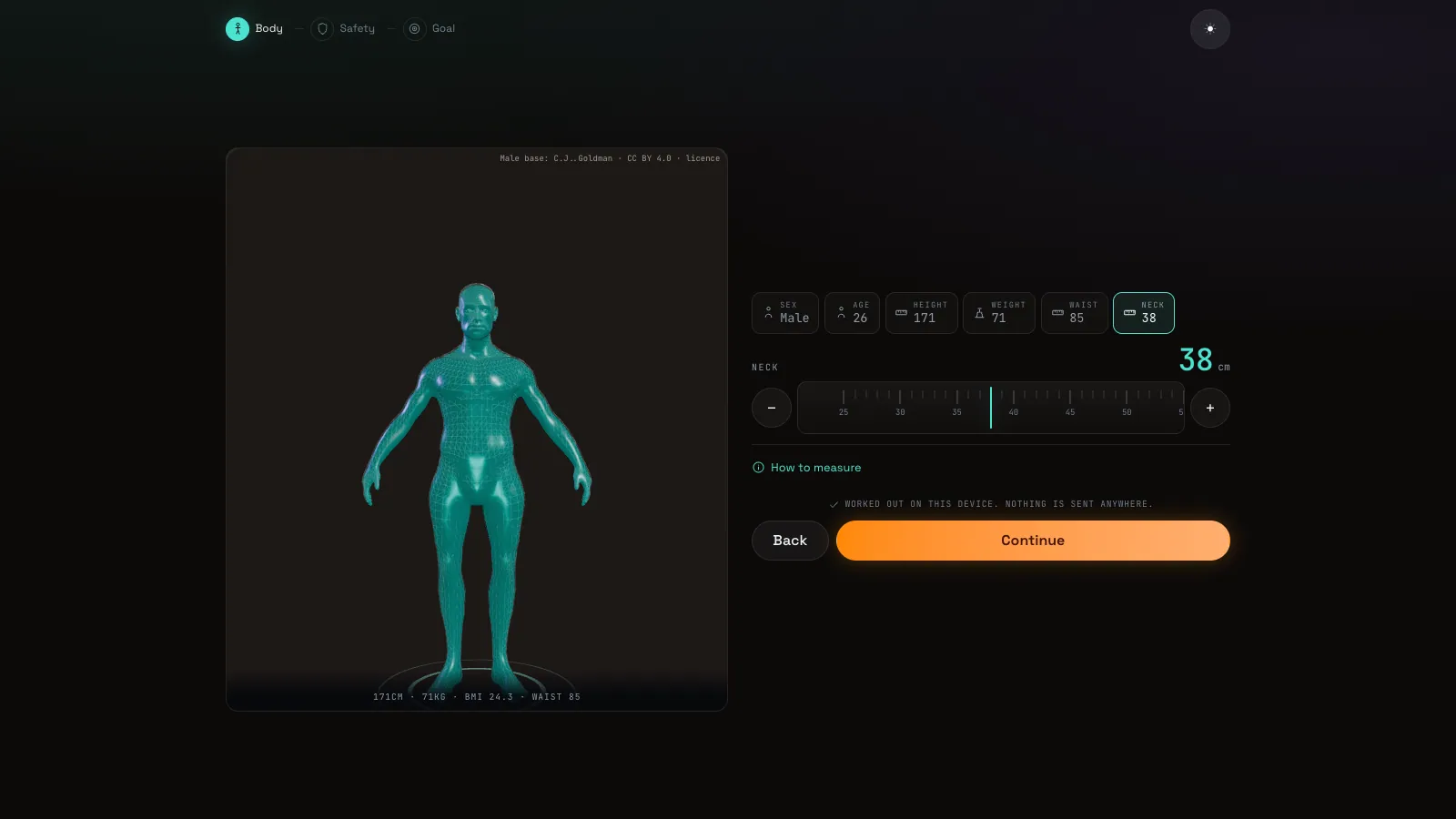
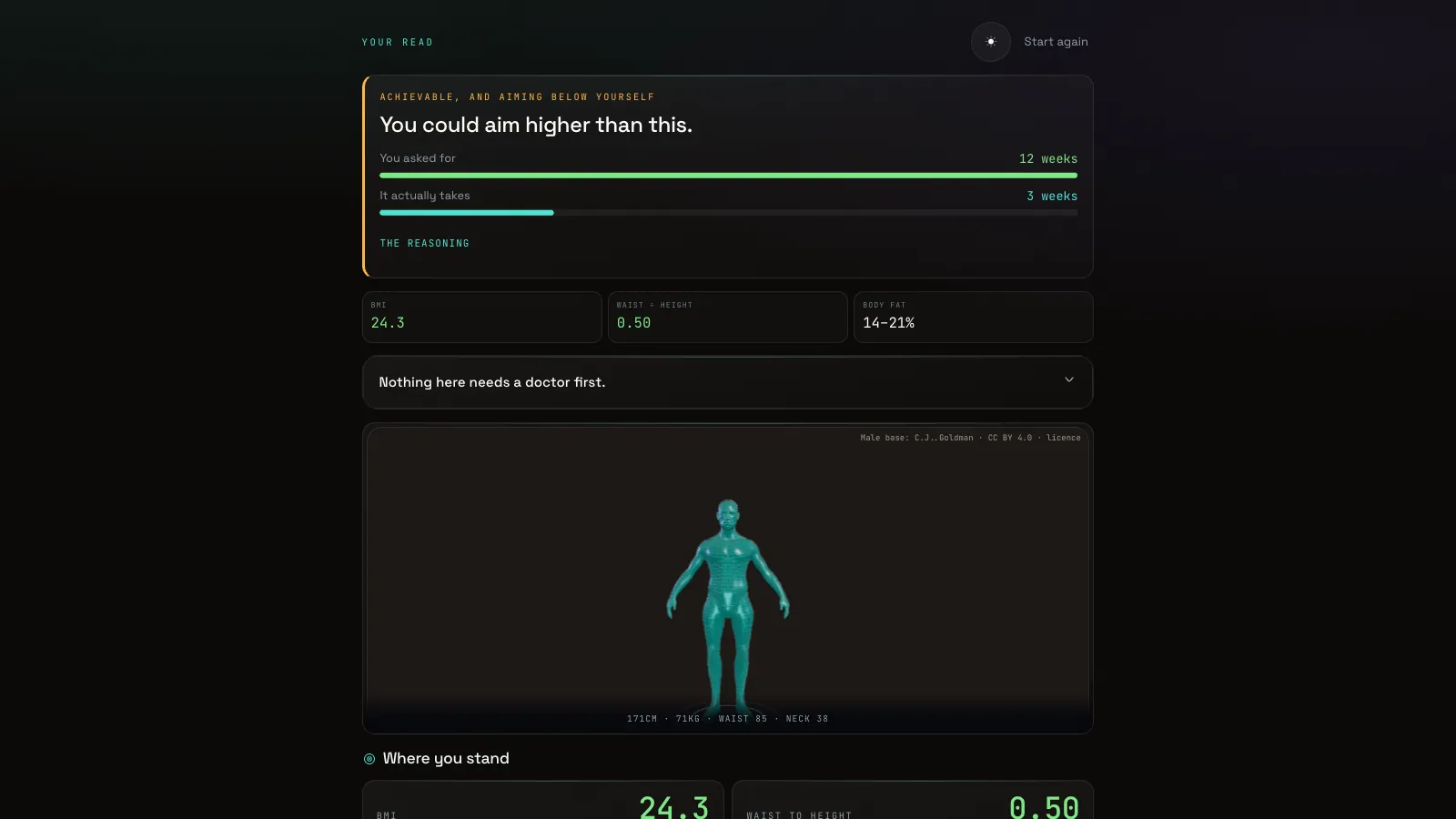
I design the system and direct AI agents to build it. I decide what it does, how it fails and what ships, and I review and test every change before it goes live. On all three, Claude, an AI coding agent, wrote the code to my direction.
Why it still took me
Claude can write a stock screener. It will not decide on its own that every score has to show its doubt. That rule is the product.
I built all three alone, so the evidence is ownership end to end. Shipped is not the same as impact. Tests prove the products work. Only real use over time proves they help.
What it proves
How I own a product end to end: the trade-offs, the implementation, and a working deployed system.
What it doesn’t
Team leadership. And it is too early for placement or conversion numbers.
What it proves
Ownership end to end: model rules, data boundaries, responsive interaction, accessibility, recovery, tests, and deployment.
What it doesn’t
Team leadership, or investment returns. Judge it on research quality instead.
What it proves
The assessment logic, evidence links, body assets, anatomy coverage, responsive flow, themes, and tested accessibility paths work as designed.
What it doesn’t
It doesn’t diagnose or replace a clinician, and can’t prove health outcomes. No usage analytics yet, so no completion rates.
Three products. One rule.