Three products. Designed and directed alone.
A private job-search desk, a research board for India’s National Stock Exchange and a free fitness assessment, each refusing to hand over an answer without its reasoning.
Problem
Confident answers, with the reasoning stripped out.
Job products, stock screeners and fitness onboarding all hand people a confident answer and leave out the reason behind it.
What I found
I never ran out of job links. I ran out of hours.
The hours went on working out which roles were real, whether remote included India, what the application should say, and who to write to.
What I decided
The missing piece was judgment.
job-lab scores whether a role is worth your hour and ties that score to the next action: the resume gate, the portfolio angle, the person to write to.
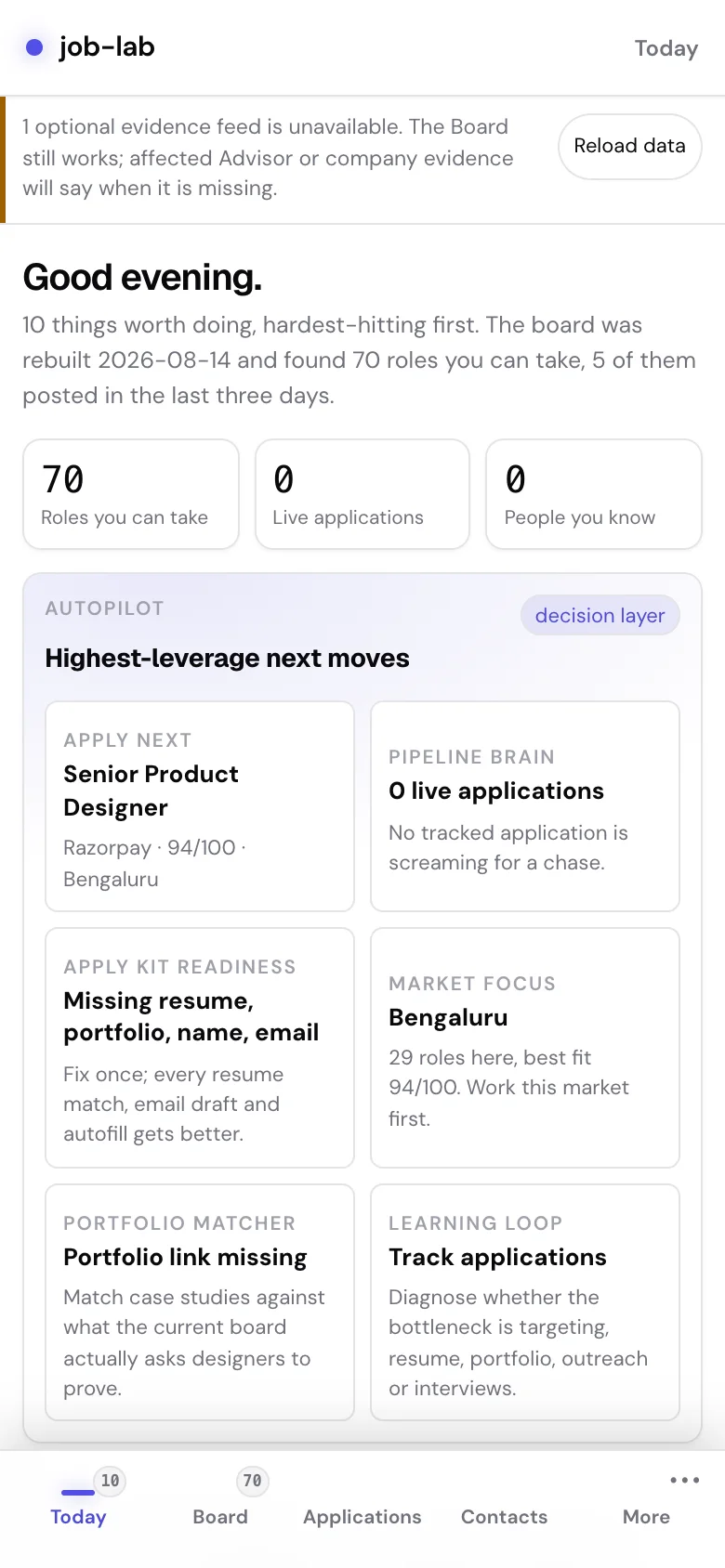
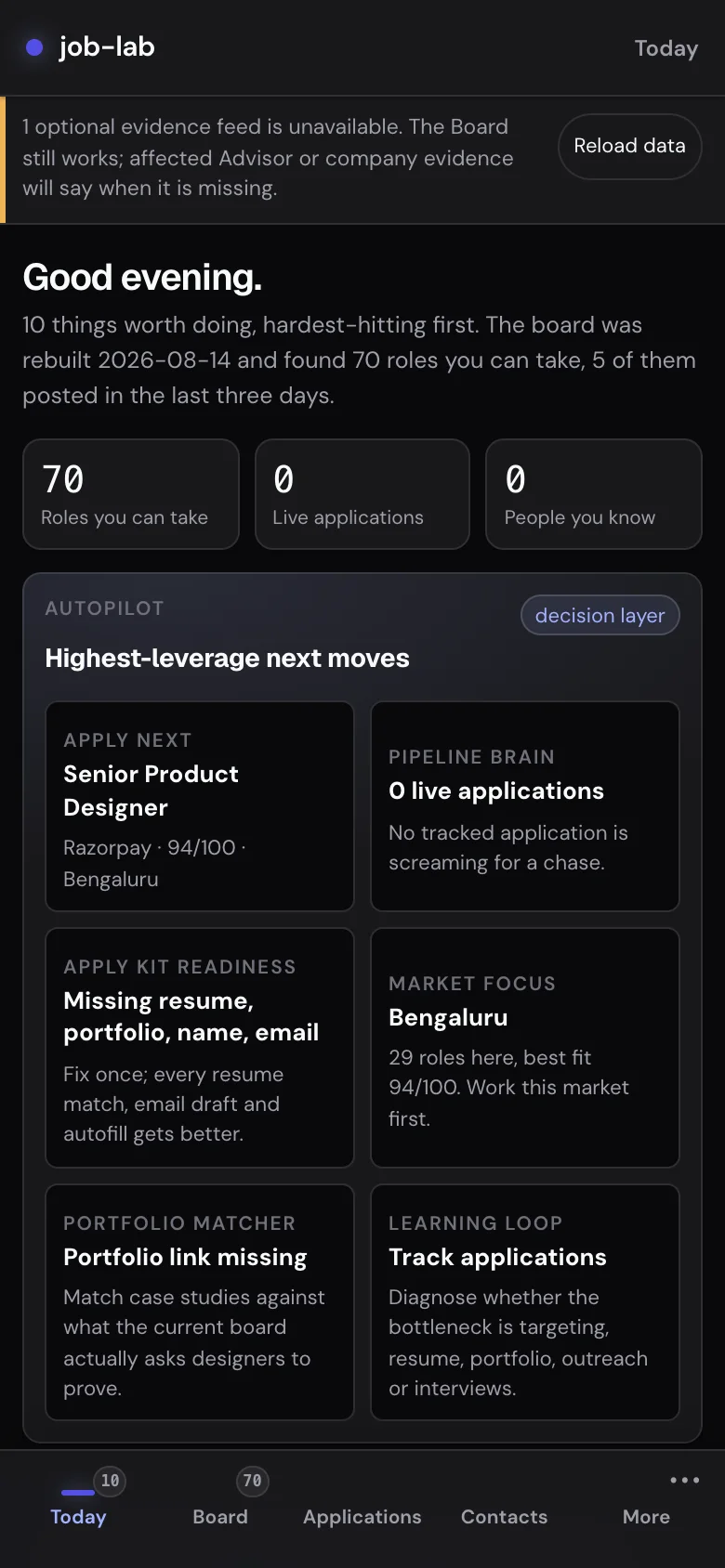
What I decided
Every score has to show its doubt.
A typical screener leads with a sortable number. market-lab scores the NSE and pairs every score with its objection: its risk, its liquidity, and the case against.
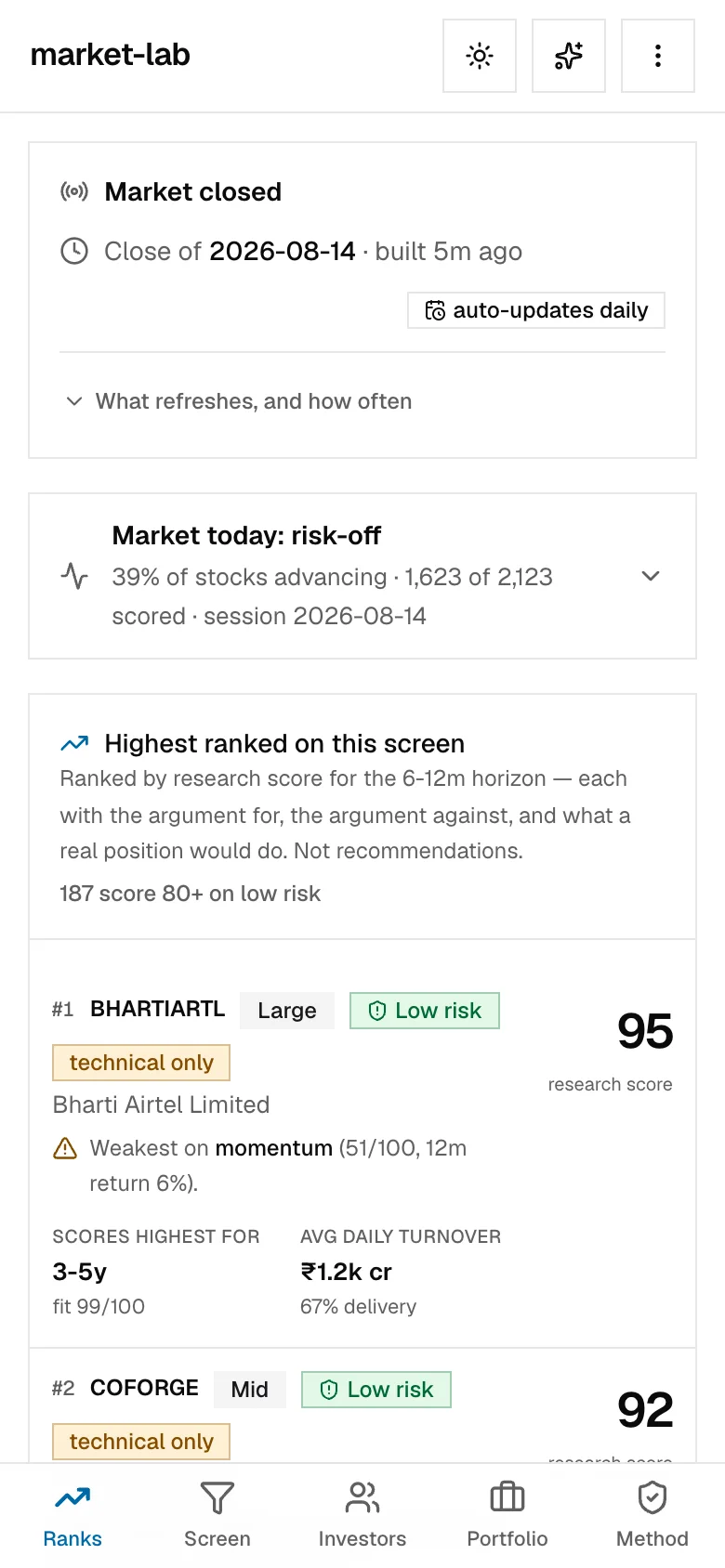
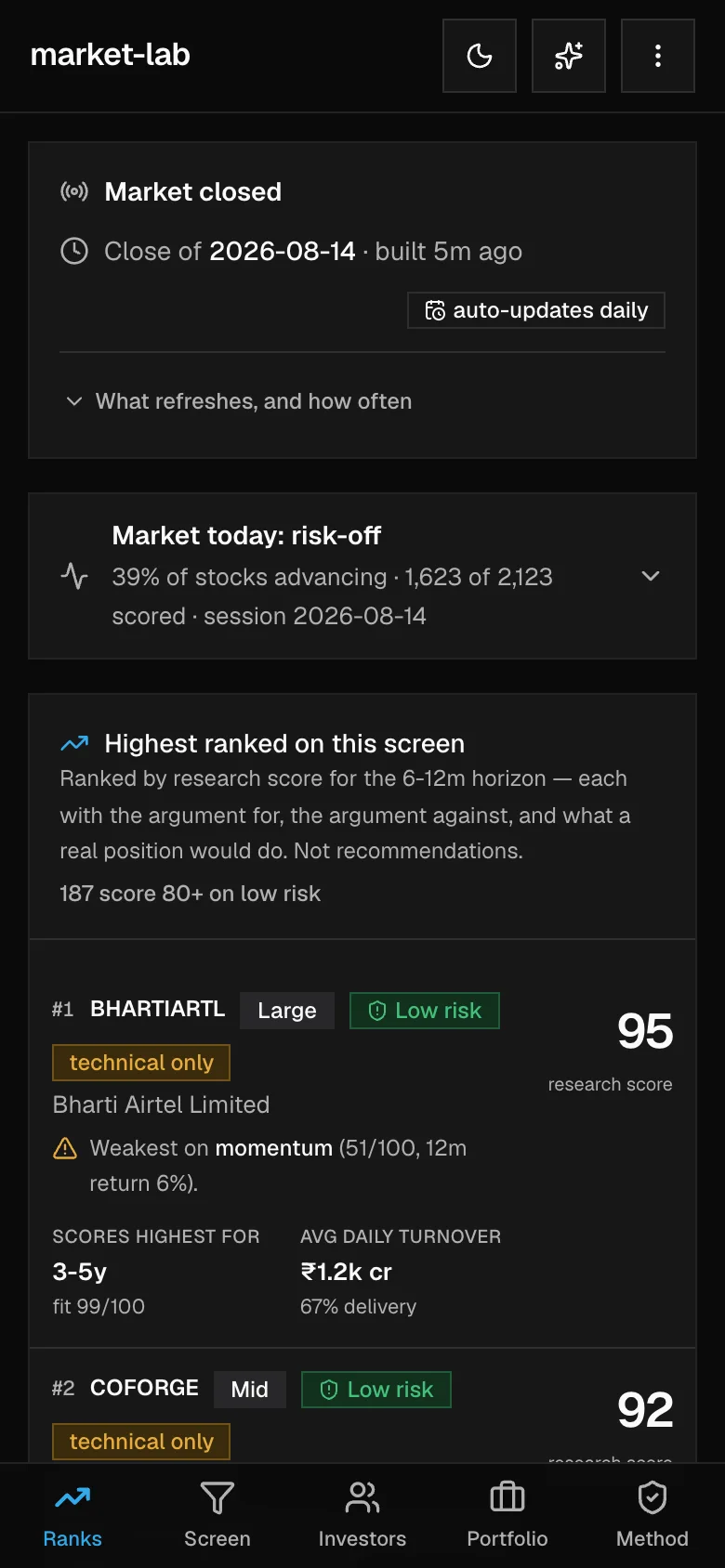
What I decided
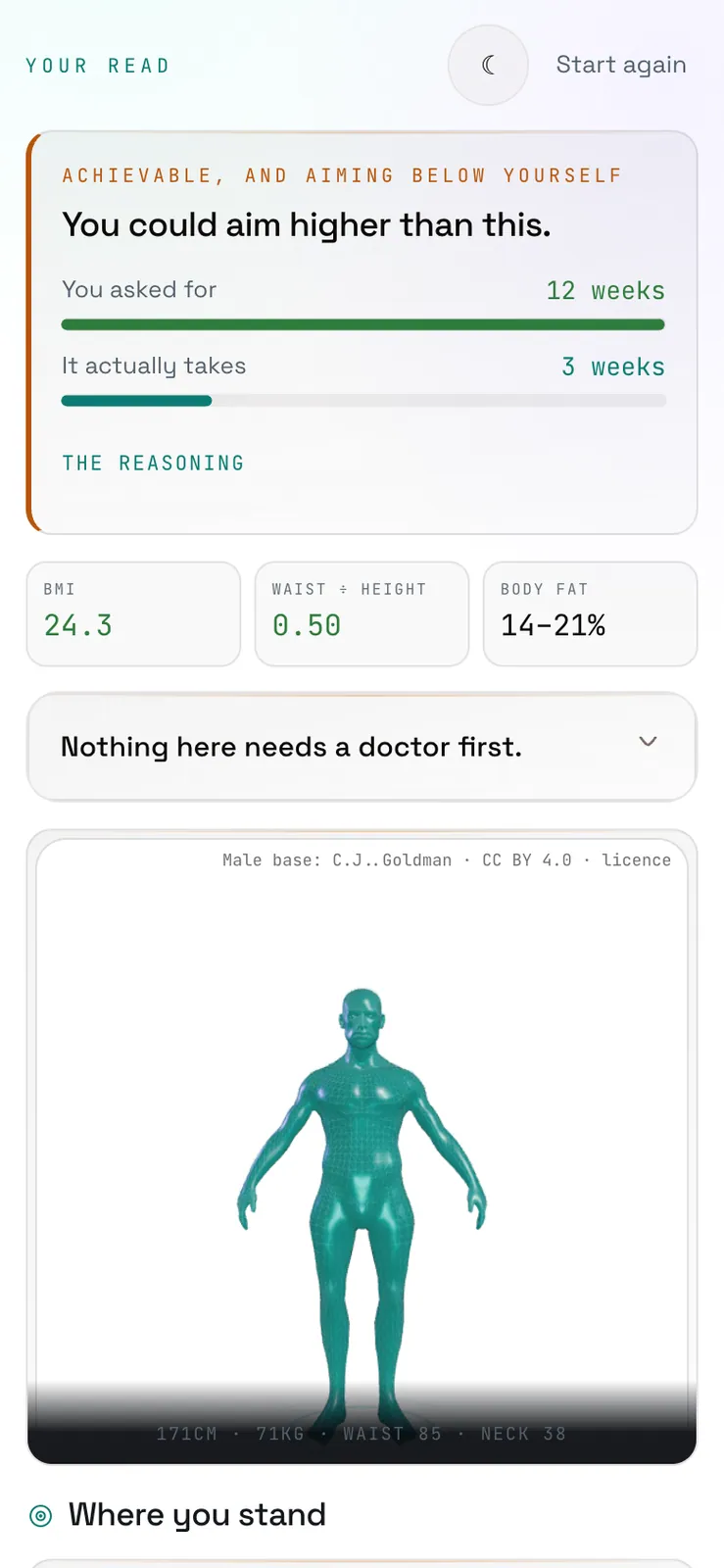
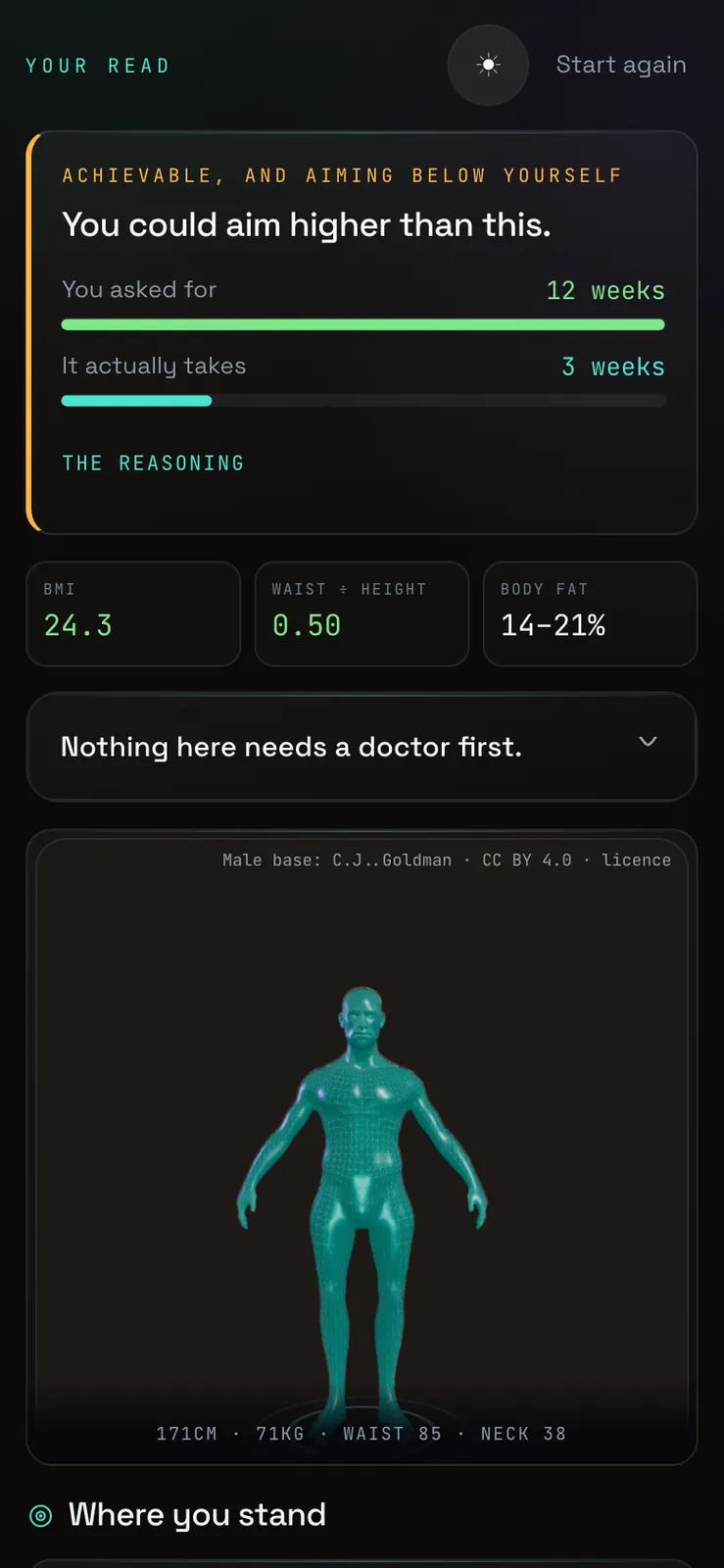
Every recommendation shows its work.
Most fitness onboarding turns a BMI label and a few preferences into a confident-looking plan. fit-lab asks only for measurements that change the answer, checks whether your goal and timeline agree, and puts the evidence and the limits next to the claim.
What shipped
Three working products, two of them public.
Each ships with automated tests and a keyboard, contrast and semantics check. On market-lab, automated WCAG 2.2 A/AA checks found no violations in the views tested.
public job-source families normalized
The real desk is private; the demo uses fictional data.
NSE stocks scored every trading day
Research quality, not returns. An independent project, not affiliated with or endorsed by NSE, BSE or NSE Indices.
unit checks across fit-lab’s engines
No usage analytics yet.
Looking back
Next, I measure real use.
Next I’d measure. Tests prove the products work; only real use proves they help. For job-lab that means time from finding a role to deciding on it, and the reply and interview rates. For fit-lab, privacy-respecting usage analytics and testing with clinicians. Then the gaps I already know: fit-lab’s verified guides are English-only, which shuts out people it was built for, and market-lab needs a log of why each score moved after a session.
There was no brief, so I took on all of it: product framing, scoring models, safety flows, data boundaries, accessibility, tests and deployment. Claude can write a stock screener. It will not decide on its own that every score has to show its doubt. That rule is the product.