On my previous theme, the same cobalt glow was pigment on paper in light mode and a navy stain in dark mode. I never changed the color. I changed what sat around it.
Josef Albers built a whole course on that idea. Interaction of Color teaches that a color has no fixed appearance. It depends on its neighbors.
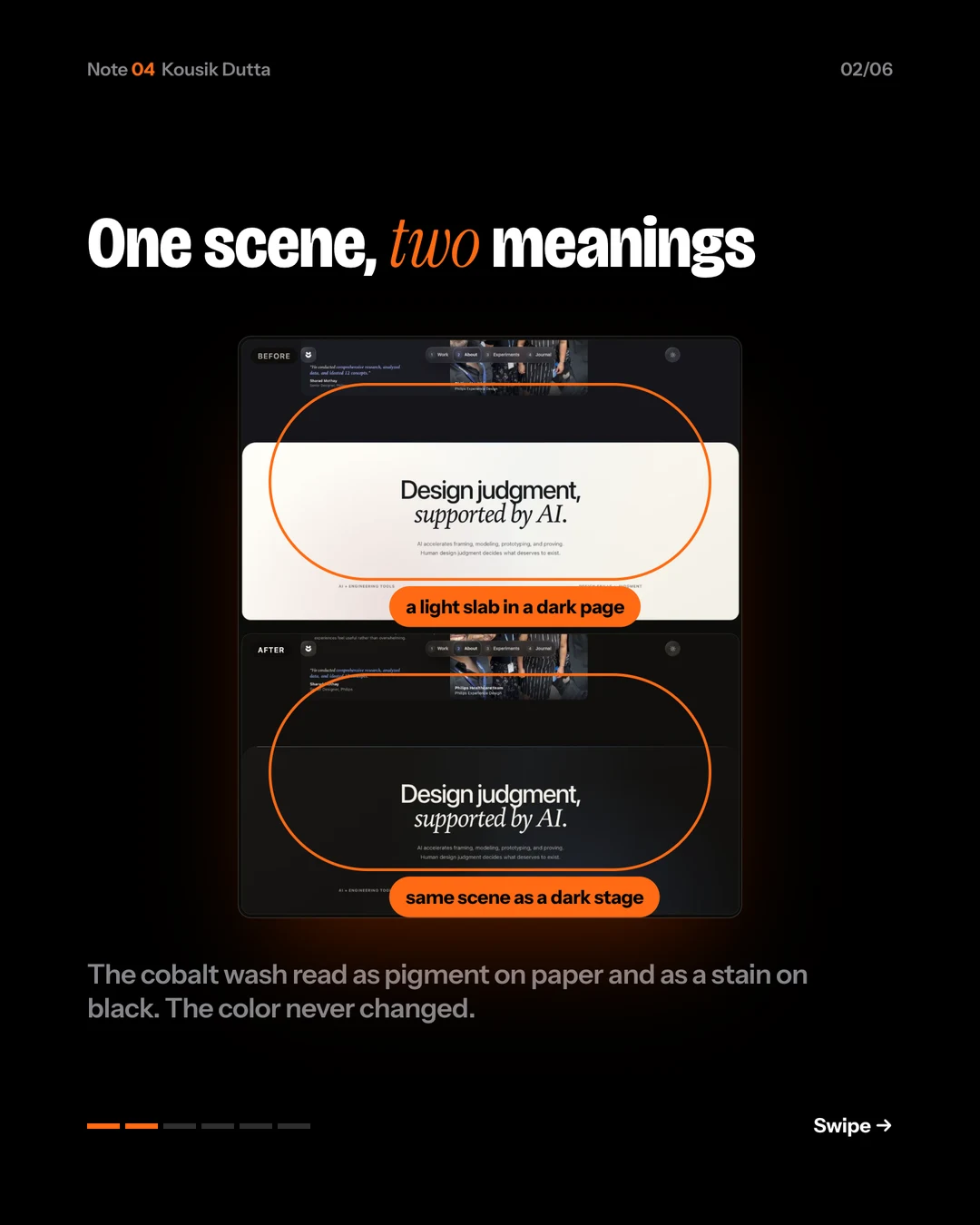
Most dark themes flip the light theme’s lightness and ship. The relationships break quietly.
First, find them. This counts every radial glow mixed from your accent color:
bash
grep -rnoE 'radial-gradient\([^;]*var\(--color-accent\) [0-9]+%' src | wc -lMine found 29 lines. Then route them all through one token with two values:
css
:root { --glow-tint: var(--color-accent); }          /* cobalt on paper */
.dark { --glow-tint: rgba(243, 236, 222, 0.42); }    /* faint ivory on black */
Every glow points at the token. One decision, written once, holding in both themes.
Want it as slides? Download the carousel.
The takeaway
A dark theme is not an inverted light theme. It is a second set of relationships.