I knew my dark mode looked off. I could not say why. Five written rules could.
AI-built UI drifts to the same place: violet grays, a glow behind everything, a lavender button. Anthropic calls it distributional convergence. Left alone, a model picks the safest, most common choice every time.
Studio already had the fix. It is called a crit. The only change is where it lives.
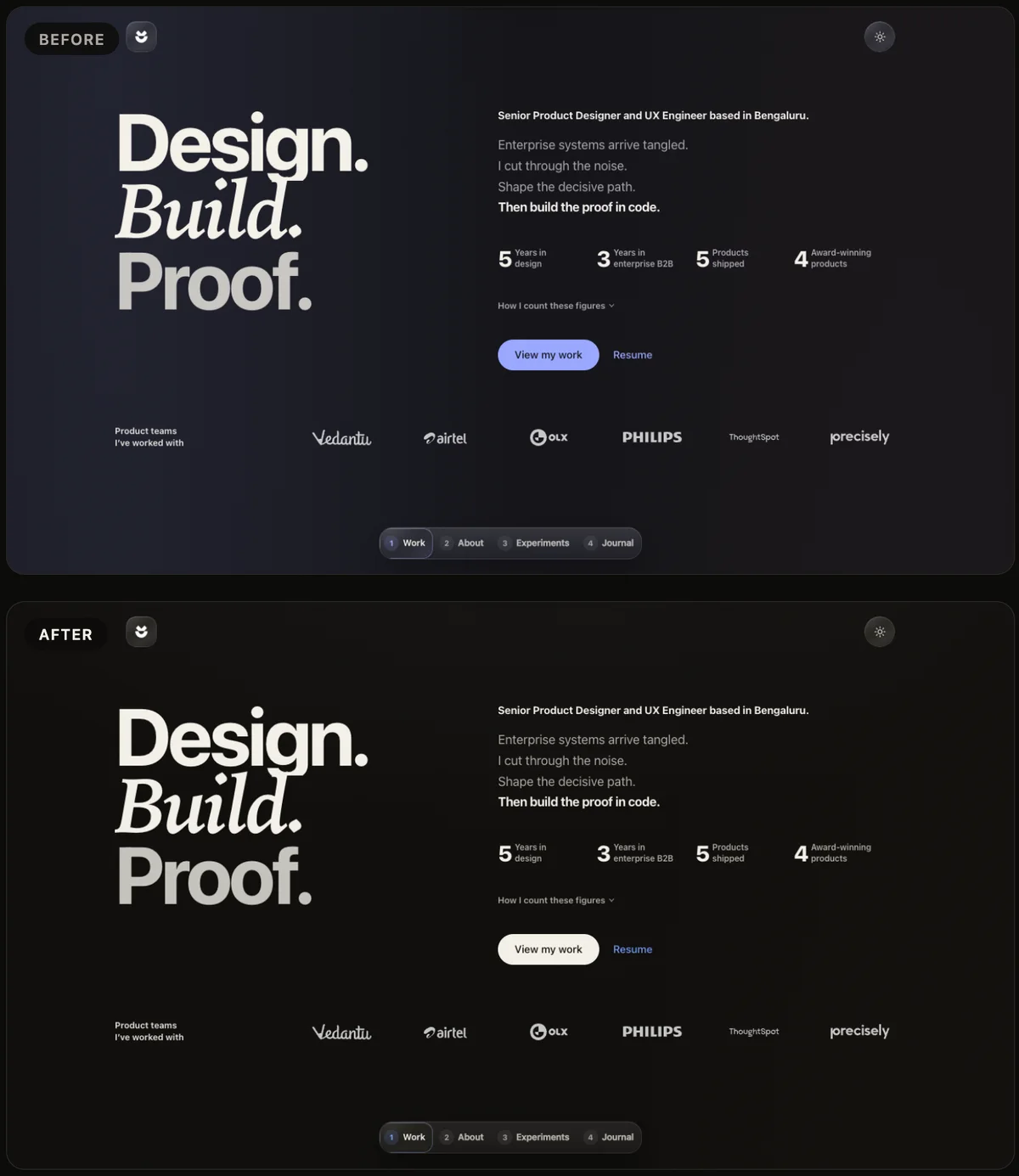
I use Impeccable, an open-source skill that gives coding agents a design vocabulary. It flagged what I had stopped seeing, including about 30 cobalt glows, from my previous theme, that read as pigment on paper and as stains on black.
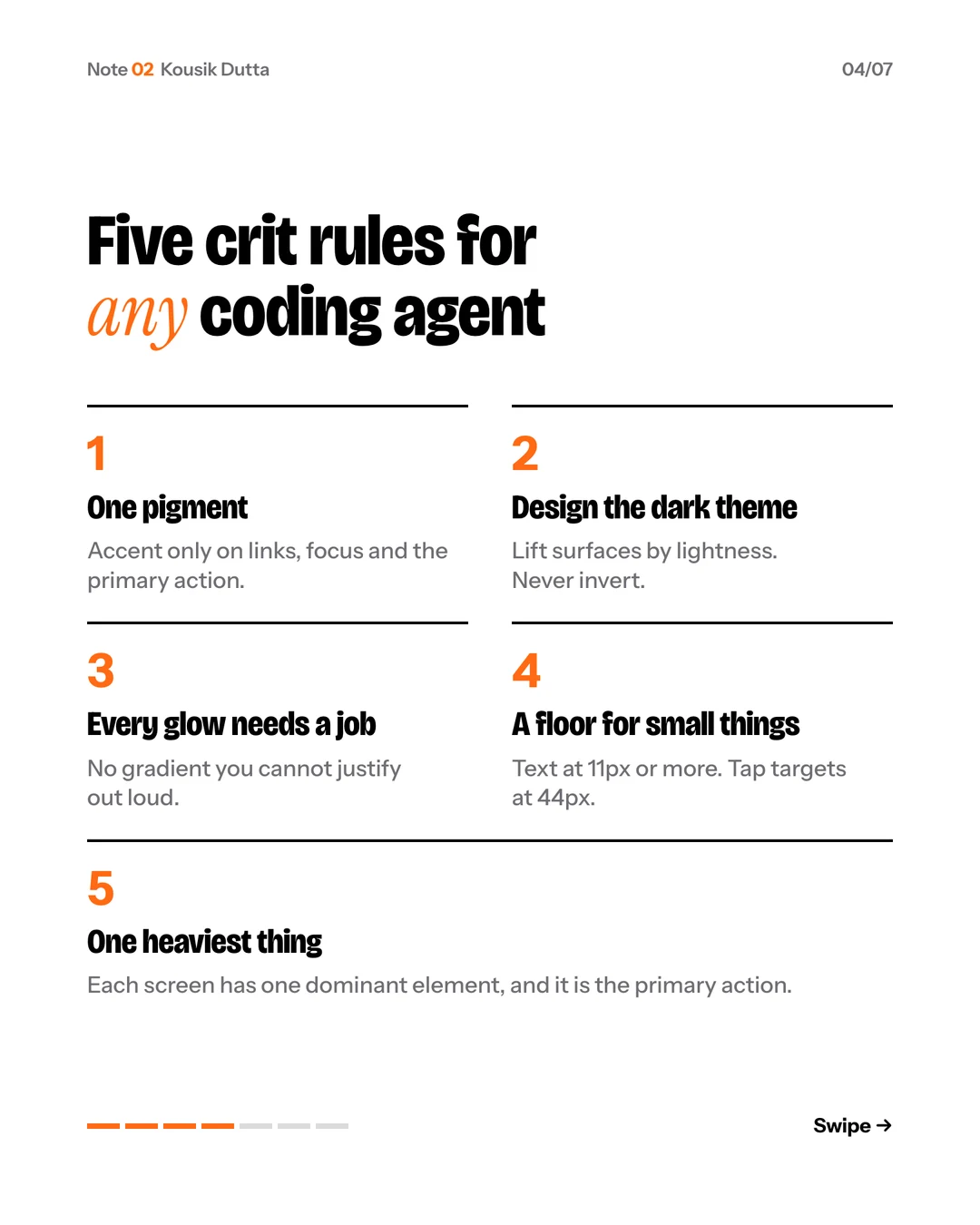
Then I wrote my own rules down. These are the five I now give every agent:
They live in one file the agent reads before it touches a page:
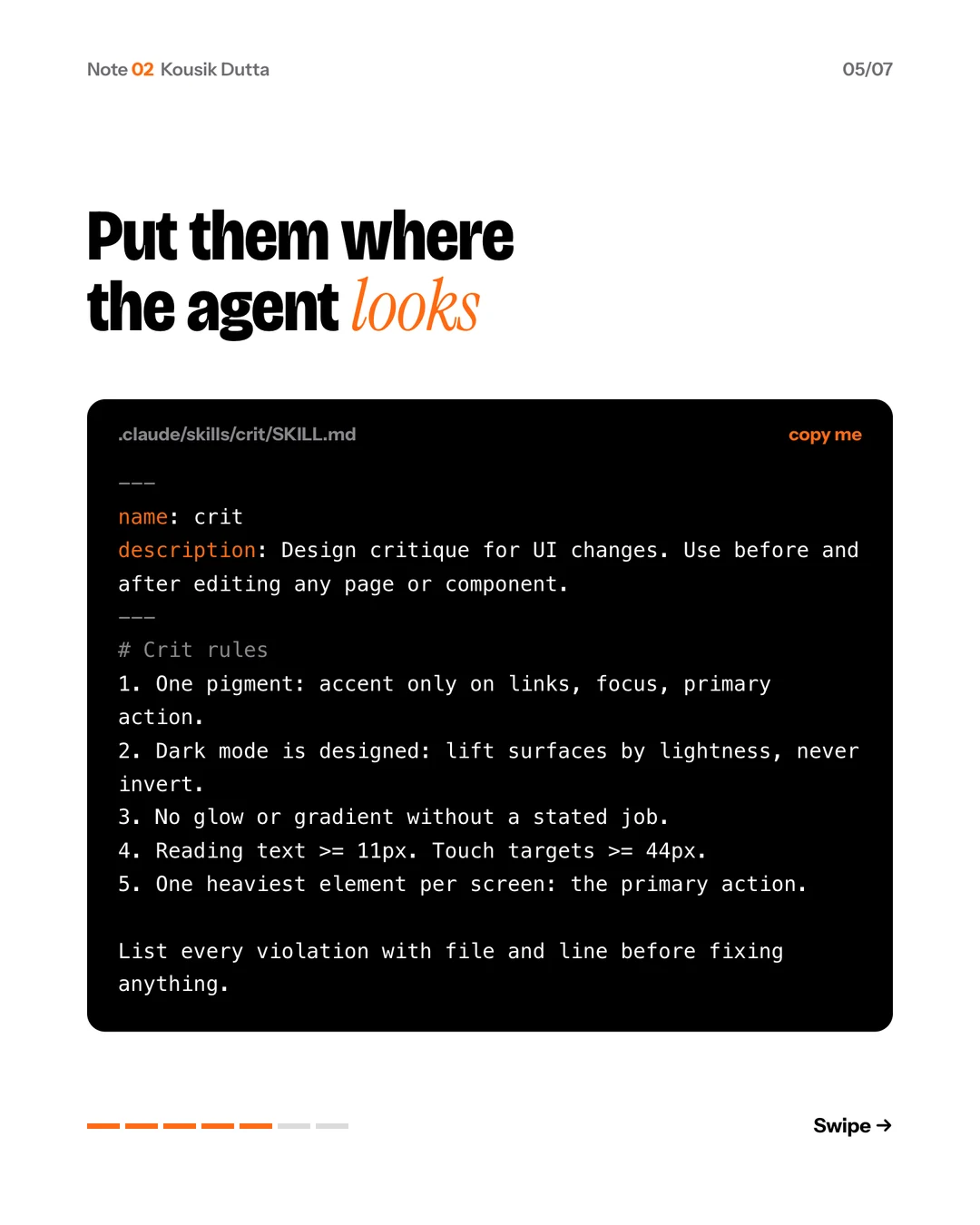
The format is Anthropic’s Agent Skills. Drop the folder in .claude/skills and Claude Code picks it up.
Then run the crit before you let it fix anything:
Use the crit skill on this page. List every violation with the file, the line and
the rule it breaks. Do not change any code until I choose which ones to fix.
Findings first, fixes second. The agent reports. You still decide.
Want the whole thing as slides? Download the carousel.
The takeaway
A crit was always rules in someone’s head. Write them down.